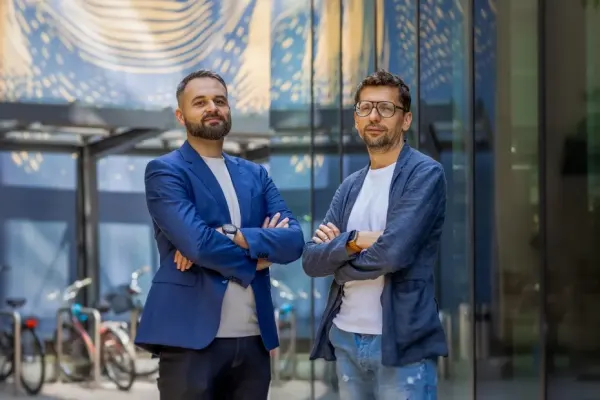

WARSAW — After more than two decades helping build Poland’s startup ecosystem, entrepreneur and investor Dariusz Żuk is setting his sights on a bigger challenge: turning the country’s growing pool of technology talent into a pipeline of globally successful companies.
Żuk, CEO of AIP Seed, says Poland no longer needs simply more entrepreneurs or another conventional venture capital fund. What the ecosystem needs, he argues, is a platform capable of combining capital, operational expertise, international networks and experienced founders to help Polish startups expand beyond their home market.
“The issue is how to create from those talents and from those founders truly global companies,” Żuk said in a recent interview with The Recursive.
His answer is a planned VC platform that would go beyond writing checks and instead support founders throughout the difficult process of building international businesses.
From Entrepreneurship to Venture Capital
Żuk has been involved in Poland’s entrepreneurial ecosystem since 2004, when he founded the Academic Entrepreneurship Incubators (AIP). The initiative has since supported more than 20,000 ventures, according to The Recursive.
He later launched Business Link, a coworking and business network that expanded across Central and Eastern Europe. In 2017, the company secured a €20 million investment from Skanska, followed two years later by Skanska acquiring a stake in the business.
Today, Żuk runs AIP Seed, an early-stage venture investor focused on technology companies with international ambitions.
His experience has given him a front-row view of Poland’s transformation from a market with limited startup infrastructure into one of Europe’s increasingly important technology hubs.
But he believes the next stage will be considerably harder.
Poland’s Missing “Flywheel”
Poland now has strong technical talent, ambitious founders and several highly valued technology companies. Yet Żuk argues that the ecosystem still lacks what he describes as “density at the very top.”
That means more founders who have taken companies from zero to substantial revenues, more private investors with experience backing technology businesses and, crucially, more large exits.
Successful exits can create a self-reinforcing cycle: founders who sell companies become angel investors, experienced executives and mentors. Their capital and knowledge then flow into the next generation of startups.
“Exits make all the flywheel work,” Żuk said.
Private capital remains another weakness. Żuk has previously argued that Poland needs a stronger pre-seed ecosystem and a larger supply of private funding, rather than relying too heavily on public sources.
A Platform Rather Than a Bigger Fund
Żuk’s proposed solution is deliberately broader than traditional venture capital.
He wants to create a VC platform built around three main components.
The first is a “founders factory”, where an experienced team would provide hands-on operational support to portfolio companies.
The second is Founders House, an exclusive community intended to connect leading Polish entrepreneurs in Warsaw and Silicon Valley. Rather than functioning as another coworking facility, the concept is designed around peer relationships, collaboration and access to experienced founders.
The third component is a flexible, long-term capital structure. Żuk envisions the ability to provide not only traditional equity financing, but also secondary transactions, investor buyouts and debt.
The platform would also be capable of investing in U.S. jurisdictions such as Delaware, reducing structural barriers for Polish companies that are preparing to build global businesses.
Building a Bridge to Silicon Valley
International connections are central to the strategy.
Żuk argues that Polish founders need stronger links to the U.S., which remains the world’s leading venture capital market. Access to American investors, customers, executives and experienced founders could help Polish startups make the transition from regional companies into global competitors.
The proposed Founders House in Silicon Valley is intended to become part of that bridge.
Żuk has also joined the board of Endeavor Poland, an organization supporting high-growth entrepreneurs. He views its global network and “pay-it-forward” model as another mechanism for giving Polish founders access to mentors and international relationships.
A Permanent Capital Ambition
The plan also includes an unusual financial component: a potential future listing of AIP Seed on the Warsaw Stock Exchange.
Żuk’s ambition is to create a more permanent source of capital rather than operate solely through conventional fund cycles. A listed platform could potentially give private investors broader access to early-stage venture investing while providing the organization with capital that can be deployed over longer periods.
That model reflects Żuk’s broader argument that venture capital alone is not enough. Startups need capital at different stages, but they also need people who understand hiring, international expansion, sales, governance and fundraising.
The Goal: Global Companies Born in Poland
Żuk’s five-year objective is ambitious: establish one of the most important platforms for Poland’s technology founders and back two or three global companies from the pre-seed stage.
The larger objective, however, is institutional.
Rather than building another fund that depends entirely on one investment cycle or one generation of managers, Żuk says he wants to create an institution capable of continuing beyond his own involvement.
For Poland’s startup ecosystem, that could prove to be the more important experiment.
The country has already demonstrated that it can produce technically strong founders and internationally recognized technology companies. The next question is whether it can develop the capital, experience and networks necessary to produce those companies consistently.
Żuk is betting that the missing ingredient is not another fund — but an ecosystem built specifically to make global ambition easier to achieve.